Small language models, explained simply
What a small language model is, how Gemma, Qwen and llama.cpp let AI run on an ordinary phone, and why a smaller model can still be useful.
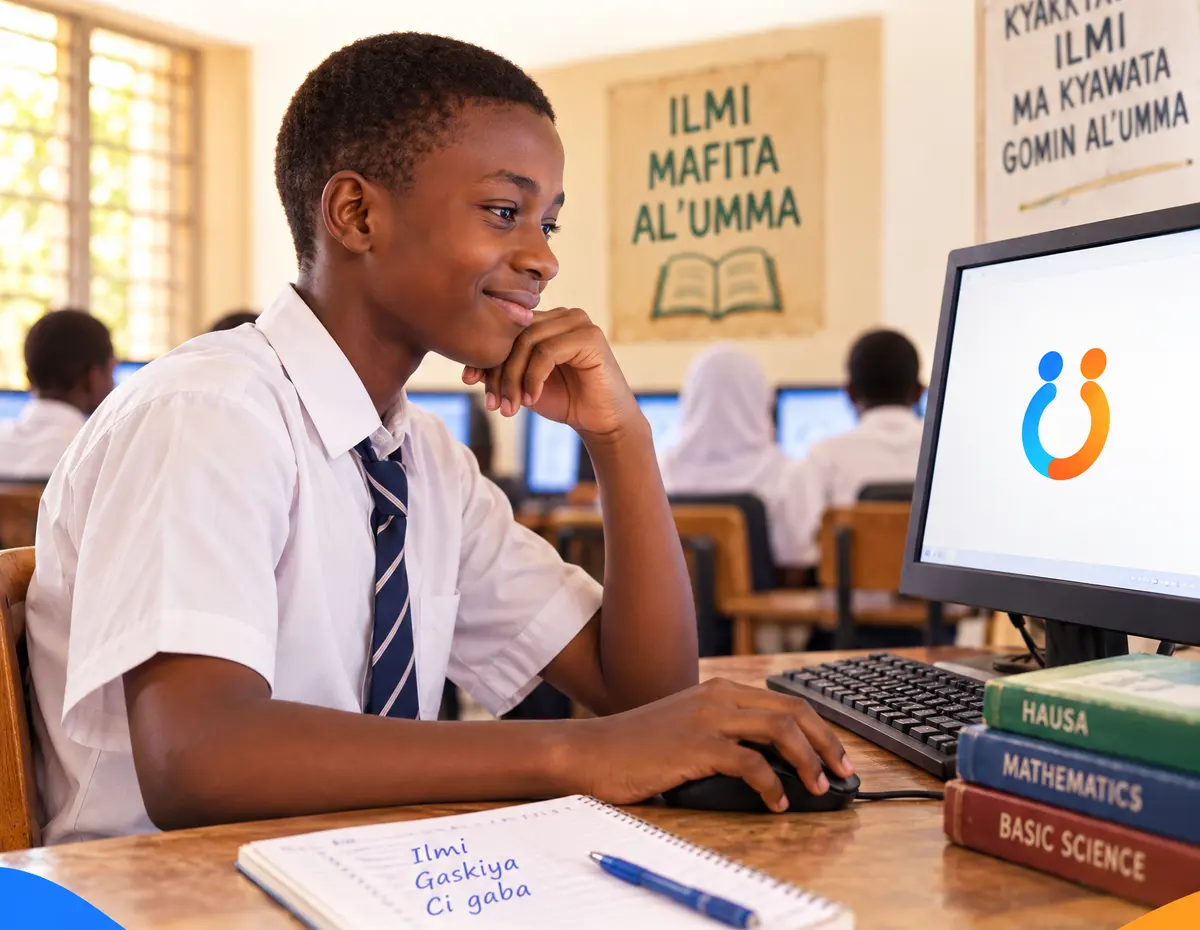
You have probably heard of AI chatbots that write essays and answer almost anything. Behind each one is a language model. This guide explains, without the jargon, what that is and how a small one can fit on the phone in your pocket.
A language model is a very good guesser
A language model has read an enormous amount of text and learnt one skill: given some words, guess what comes next. Ask it “How do I prevent” and it has learnt that “malaria” is a likely next word, and what kinds of sentences usually follow. Repeat that guess thousands of times and you get an answer.
What it learnt is stored as billions of numbers, called parameters. More parameters can hold more knowledge and more careful reasoning, but need more memory and more computing power.
Big models and small models
The largest online models are far too big for any phone, so they run in data centres and you reach them over the internet. Small models have one to a few billion parameters. They know less, but they fit in a few gigabytes and can run on an ordinary Android phone with no connection at all.
Models are also compressed to fit. Each number is stored with less precision, a bit like saving a photo at lower quality. The answers stay nearly as good while the file gets much smaller. That is why Aboki Lite is only 704 MB.
The models inside Aboki
All four are open models, which means anyone may download, study and run them:
- Aboki Lite is Gemma 3 with 1 billion parameters, made by Google. Quick, and the best start on phones with 3 GB of memory.
- Aboki Study is Qwen3 with 1.7 billion parameters, made by Alibaba. Better at school subjects and explaining step by step.
- Aboki Pro is Gemma 3 with 4 billion parameters. Longer, more careful answers on stronger phones.
- Aboki Health is MedGemma, a 4 billion parameter Gemma trained further on medical text. It gives general health information for adults, never a diagnosis, and is hidden in homework mode.
They run on the phone with llama.cpp, free software that lets these models work on ordinary phone processors. See which phone can run offline AI for the memory each one needs.
Making a small model more reliable
A small model has less room for facts, so it is more likely to guess wrong. Aboki helps it in two ways. First, it carries an offline library: short, trusted notes on topics like malaria prevention, oral rehydration, fractions and photosynthesis. Before answering on one of those topics, Aboki searches the library and gives the model the right note to read, then shows which note it used.
Second, it can read your own material. Take a photo of a homework page or a letter and Aboki reads the printed words on the phone, so the model answers about what is actually in front of you.
Why not just use the internet?
For many people in Nigeria and across West Africa, data is bought by the megabyte and signal comes and goes. A model on the phone costs nothing per question, works anywhere, and keeps questions private. A smaller, honest helper that is always there can be worth more than a brilliant one you cannot afford to reach. Read more in how to use AI with no internet or data.
Quick answers
- What is a small language model?
- A language model is a file of numbers trained to predict and write text. A small one has a few billion parameters or fewer, so it fits in a phone’s memory and runs without the internet.
- Which models does Aboki use?
- Aboki uses open models: Gemma 3 1B (Aboki Lite), Qwen3 1.7B (Aboki Study), Gemma 3 4B (Aboki Pro) and MedGemma 4B (Aboki Health), run on the phone with llama.cpp.